



 September 21, 2026
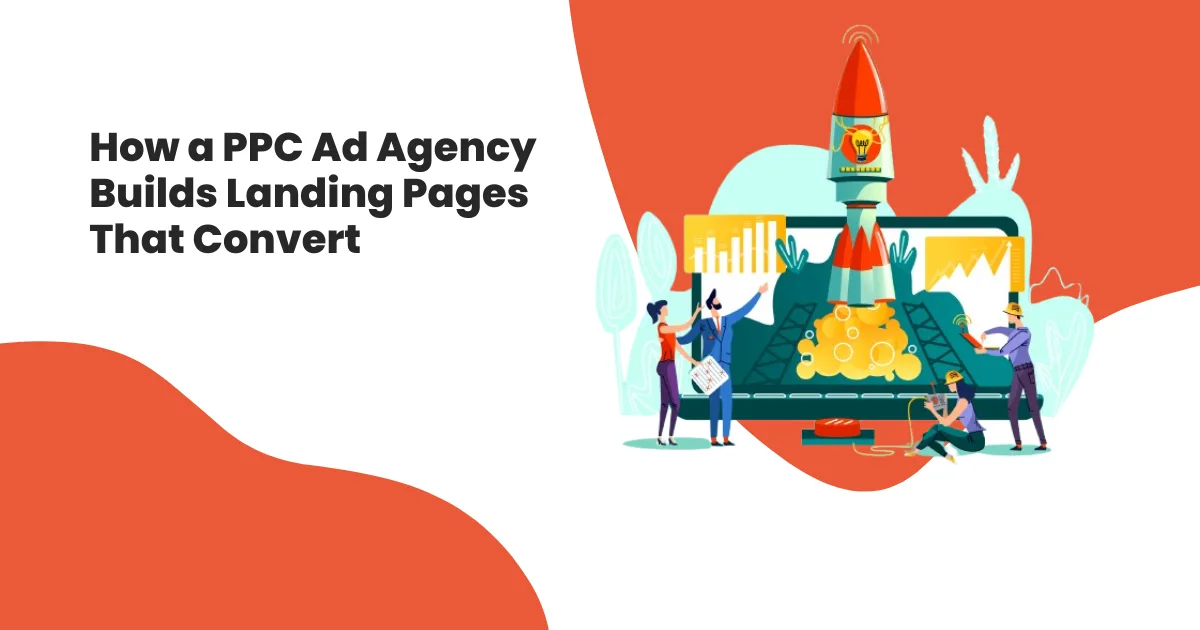
How a PPC Ad Agency Builds Landing Pages That Convert
With the paid ad or campaign, you make it reach your website to the potential audience. However, it’s the landing page that helps you convert potential audiences into customers.
How? If a visitor clicks an ad and finds it a slow, confusing, or irrelevant page.
A PPC ad agency applies a different approach to landing page development. So, instead of treating the page as a standard website asset, they try to develop an experience around the ad, search intent, offer, and conversion goal.
In this blog post, we mentioned everything, like how they do it. Let's explore.
How a PPC Ad Agency Builds Landing Pages That Convert
-
Matches the Landing Page With the Ad Intent
A landing page must be created in a way that continues the conversation started by your paid ad. For instance, an ad targeting “ Dubai SEO services” should not send users to a generic homepage. The landing page must fulfill the purpose of the ad, such as service breakdown, benefits process, and even the next step to take.
This creates a consistent path: Search query → PPC ad → landing page → conversion
A PPC ad agency studies the keyword, ad copy, audience, and campaign objective before deciding what the landing page should communicate.
2. Gives the Page One Clear Conversion Goal
Too many options can distract visitors.
A PPC landing page usually focuses on one primary action, such as:
-
Request a quote
-
Book a consultation
-
Submit an inquiry
-
Call the business
-
Start a purchase
-
Schedule a demo
The page content, buttons, forms, and supporting sections are structured around that action.
This gives visitors a clear understanding of what to do next instead of making them navigate through unrelated website pages.
3. Places the Value Proposition Above the Fold
Visitors should understand the offer quickly. The first section normally answers three questions:
-
What is being offered?
-
Why should I care?
-
What should I do next?
A strong headline communicates the primary benefit. Supporting copy provides context, while a visible CTA gives visitors an immediate next step.
The goal is not to explain everything above the fold. It is to give visitors enough relevant information to continue.
4. Uses Message Match
Message match connects the wording of the ad with the landing page. Suppose a PPC ad promotes:
“Get Professional PPC Services in Dubai”
The landing page should reinforce that same intent instead of presenting a completely different headline. This consistency reduces confusion and reassures visitors that they have reached the right destination.
A PPC ad agency can also create different landing page variations for different campaigns, services, locations, or audience segments.
5. Builds Trust Before Asking for the Conversion
Paid traffic does not automatically mean visitors trust the business. Landing pages can reduce hesitation by including relevant trust signals, such as:
-
Client reviews
-
Testimonials
-
Case studies
-
Certifications
-
Industry experience
-
Results or performance data
-
Recognizable client brands
-
Service guarantees where applicable
The placement matters too. Trust elements should appear where they help answer the questions a visitor is likely to have before converting.
6. Keeps Forms Simple
Every additional form field can create friction. A PPC ad agency considers what information is genuinely needed to qualify or respond to a lead.
For a basic inquiry, asking for a name, contact information, and a short requirement may be enough.
For a high-value B2B service, additional qualification fields may make sense. The right form is therefore not necessarily the shortest one. It is the one that collects enough information without creating unnecessary resistance.
7. Designs for Mobile Visitors
A landing page can look excellent on a desktop and still perform poorly on mobile. A conversion-focused page needs:
-
Responsive layouts
-
Readable text
-
Fast-loading elements
-
Touch-friendly buttons
-
Shorter forms
-
Clear CTA placement
-
Easy-to-scan sections
This matters particularly for PPC campaigns where a significant portion of traffic can come from mobile searches.
The visitor should be able to understand the offer and complete the desired action without excessive scrolling, zooming, or navigation.
8. Removes Unnecessary Distractions
Landing pages are designed for a specific campaign objective. That means unnecessary navigation, excessive links, competing CTAs, and unrelated content can weaken the conversion path.
This does not mean every landing page needs to remove all navigation. The structure should depend on the campaign, audience, offer, and conversion objective. The key is to make the intended action obvious.
9. Tests Different Landing Page Elements
A landing page is rarely treated as finished after launch.
A PPC ad agency can test elements such as:
-
Headlines
-
CTA wording
-
Button placement
-
Form length
-
Images
-
Offers
-
Testimonials
-
Page structure
-
Supporting copy
For example, one version might use “Get a Free Quote,” while another uses “Request Pricing.” Performance data can then show how visitors respond to each variation.
Testing should focus on meaningful changes rather than changing multiple unrelated elements without a clear hypothesis.
10. Connects Landing Page Data With PPC Performance
Landing page performance cannot be separated from campaign performance. A PPC ad agency can monitor metrics such as:
-
Click-through rate
-
Landing page conversion rate
-
Cost per lead
-
Cost per acquisition
-
Form completion rate
-
Lead quality
-
Bounce or engagement signals
-
Return on ad spend where applicable
This helps identify where the conversion path is losing potential customers.
For example, strong ad engagement combined with weak landing page conversions can indicate that the advertisement is generating interest while the landing experience needs improvement.
How a PPC Ad Agency Turns Clicks Into Conversions
A converting landing page is not simply a visually attractive page. It connects search intent, ad messaging, offer, page experience, trust, and conversion design into one journey.
A PPC ad agency uses campaign data and audience behavior to refine that journey over time. The result is a landing page built around what paid visitors need to see, understand, and do before taking action.
Build PPC Landing Pages That Turn Clicks Into Customers
At Quick Digitals, we build PPC campaigns around more than clicks. Our experts create a tailored approach for targeting, campaign messaging, landing page, and conversion tracking to create a smoother path from search inquiry.
Our specialists help you create landing pages that match the user intent, communicate the offer clearly, and minimize the conversion hassles to provide you with scalable campaign performance.
Ready to get more value from your paid traffic? Partner with Quick Digitals to build PPC campaigns and landing pages designed to generate meaningful conversions.
Key Takeaways
-
Landing pages should match the intent behind PPC ads.
-
One primary conversion goal keeps the visitor journey focused.
-
Strong message match creates consistency between ads and landing pages.
-
Trust signals can reduce hesitation before conversion.
FAQs
1. What is a PPC landing page?
A PPC landing page is a focused page designed to turn paid ad visitors into leads, inquiries, or customers.
2. How does a PPC ad agency improve landing page conversions?
It aligns the page with ad intent, strengthens the offer, reduces distractions, and optimizes CTAs, forms, and page experience.
3. What should a high-converting PPC landing page include?
It should have a clear headline, a relevant offer, a strong CTA, trust signals, concise copy, and an easy conversion path.
4. Why does message match matter in PPC?
Matching the landing page with the ad reassures visitors they have reached the right destination and keeps the user journey consistent.
5. How can PPC landing pages be optimized?
Agencies can test headlines, CTAs, forms, layouts, offers, and other elements using campaign and conversion data.
Categories
Recent Post
 September 30, 2026
What the Best Digital Marketing Company Dubai Actually Does
 September 28, 2026
SEO UAE Beyond Keywords Building a Stronger Search Presence
 September 25, 2026
How a PPC Management Agency Dubai Reduces Wasted Ad Spend
 September 23, 2026
